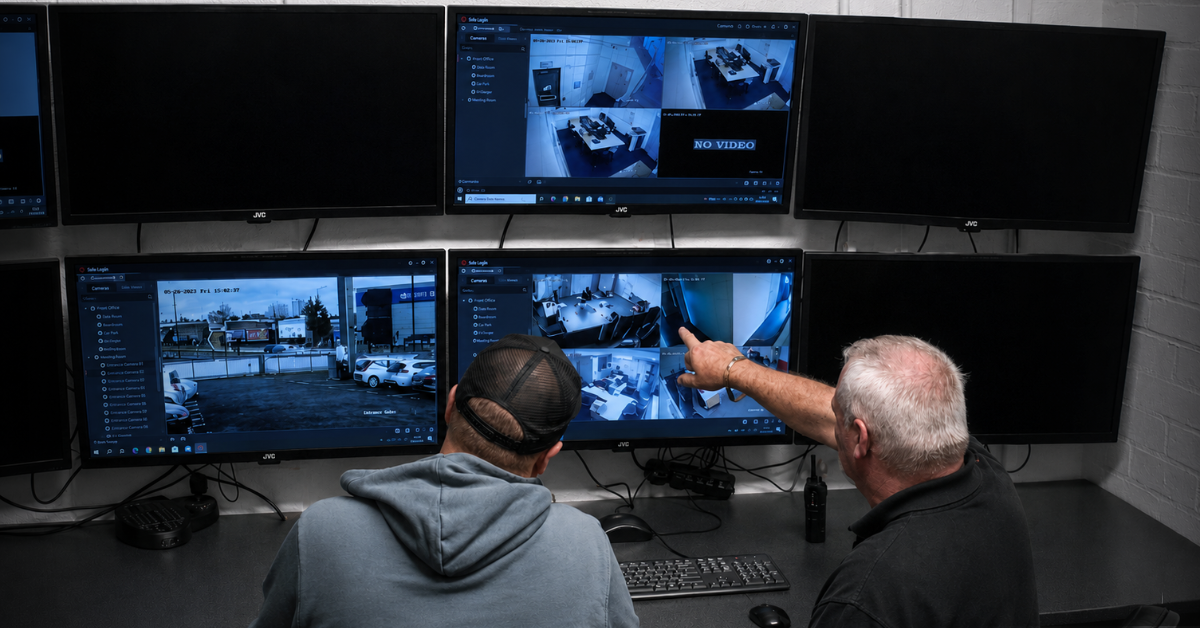
If you have ever watched a control room full of monitors and wondered how someone ends up in that chair, the answer is shorter than you might think. A Level 2 SIA CCTV Operator qualification, three days of training, and a licence application stand between you and a role that pays up to £15 an hour and is in demand across every major UK city. This guide walks through exactly what the course covers, what the licence involves, what it costs, and what comes after you qualify.
What Is the SIA CCTV Operator Course?
In practical terms, the course prepares you to work inside a CCTV control room: monitoring public spaces, identifying incidents as they develop, and producing the kind of documentation that holds up if footage is ever needed as evidence. It is not just a legal formality. Control rooms operate under real scrutiny, from data protection law to police evidence requests, and the course is built around preparing you for that responsibility, not just passing a test.
Who Actually Needs a CCTV Licence?
This trips a lot of people up, so it is worth being precise. SIA guidance splits public space surveillance work into front line and non-front line licences. You need the licence-linked qualification only if you are applying for a front line licence, meaning you will personally be operating CCTV to monitor or identify members of the public. If you are a manager or supervisor who will not carry out that day to day monitoring yourself, a non-front line licence may apply instead, and it does not require the same training route.
Either way, the licence itself is not optional if your role is licensable. Working as a CCTV operator without one is a breach of the Private Security Industry Act 2001, and it is the kind of gap employers check for before your first shift, not after.
What Will You Actually Learn on the Course?
The qualification is split into two units, and the structure tells you a lot about what the job really involves.
Unit 1:
Unit 1 covers the foundations every private security operative need: your legal powers and limits, arrest procedures, safe working practice, fire and emergency procedures, communication, record keeping, and how to respond if a terror threat or vulnerable person situation arises on your watch. This is the same grounding shared across most SIA-licensed roles, which is part of why many CCTV operators go on to hold a Door Supervisor licence as well, since the two roles overlap more than people expect.
Unit 2:
Unit 2 is where it gets specific to the control room: how surveillance systems and equipment actually work, the legislation that governs public space surveillance, operational procedures, incident response, and how to produce evidential documentation that would stand up if a case ever went further. By the end, you are not just able to operate the equipment, you understand why the rules around it exist, which matters the first time you are the one deciding whether footage needs to be flagged.
How Is the Course Assessed, and How Hard Is It?
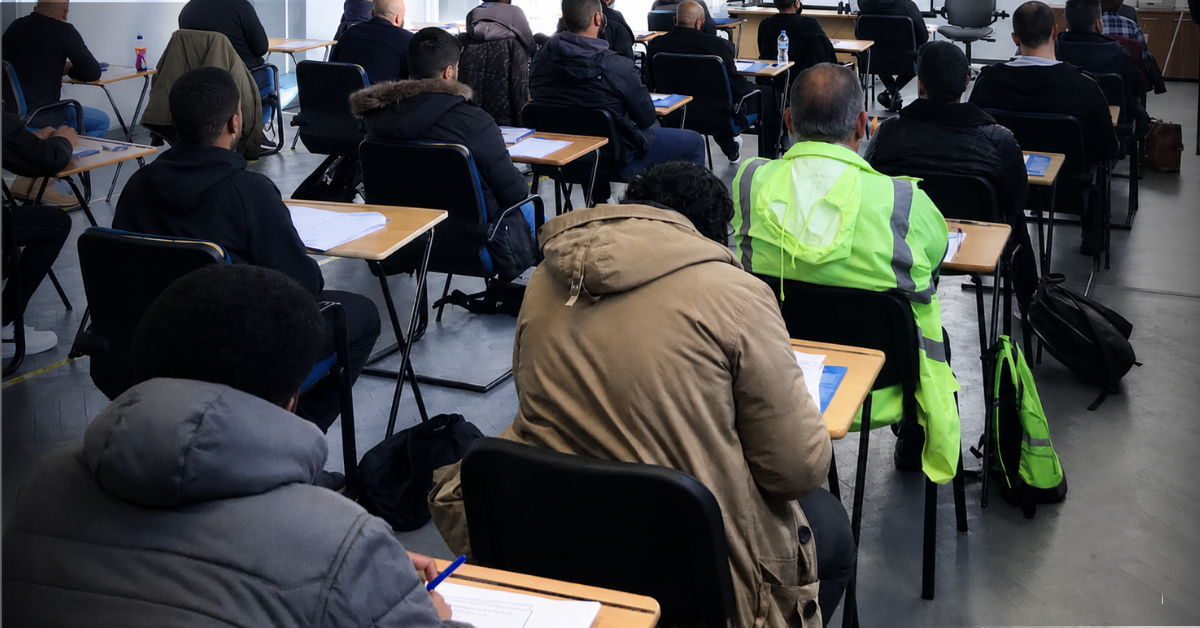
You sit two multiple choice exams. Unit 1 is 72 questions in 1 hour 50 minutes, with a pass mark of 51. Unit 2 is 40 questions in 1 hour, with a pass mark of 28. Both are sat on the same training premises, and results are released the same day, so you are not left waiting to find out whether you need to plan a resit.
This is where it is worth being direct about outcomes rather than vague reassurance: across Training 4 Employment’s SIA courses, the pass rate sits above 95%, and the training is structured so that everything in the exam has already been covered in the classroom, not left for you to piece together from self study. If you do not pass first time, the policy is no pass, no retake fee, covering two resits at no extra cost. That is a genuinely useful thing to check for when comparing providers, since not every training company covers resits the same way.
How Much Does the SIA CCTV Course Actually Cost?
There are two separate costs, and conflating them is the most common confusion people have going in.
- Course fee: The course fee starts from £201.50 and covers the three day training, the e-learning materials, both exams, and up to two free resits if needed.
- SIA licence fee: The SIA licence fee is a separate £204, paid directly to the SIA when you submit your licence application after passing. This is non-refundable, but if you pay it yourself as a basic rate taxpayer, you can claim £49 back in tax relief. If you need a second licence for another role, you may also be eligible for a 50% discount on that second application.
So the realistic total to go from unqualified to fully licensed sits around £405, before any tax relief you are entitled to. Course dates run throughout the year in Birmingham, with the current schedule including 28 to 30 September 2026 and 30 November to 2 December 2026, both delivered 9am to 5pm.
How Long Does It Take to Become a CCTV Operator?
The classroom portion is three days, delivered as blended learning, meaning you get instant access to e-learning materials the moment you book, to work through before you arrive. That preparation time matters more than people expect, since it means the three in-person days are spent consolidating and practising rather than absorbing information from scratch.
Once you pass, the qualification itself does not expire, but your SIA licence, once granted, is valid for three years before it needs renewing.
SIA CCTV Licence: Application and Renewal
Once you hold the Level 2 CCTV qualification, the licence application itself is handled directly through the SIA. You will need to be at least 18, pass an identity check, and pass a criminal record check. Most identity verification can now be completed online, though a Post Office visit is sometimes required depending on your documents.
Renewal does not require you to retrain from scratch. Unlike some other licence types, CCTV licence renewal is a straight reapplication and fee, not a mandatory refresher course. You can apply to renew from up to four months before your current licence expires, and the process runs through the same SIA online system. If you are also due to renew a Door Supervisor or Security Guarding licence at the same time, it is worth checking separately, since those do carry top-up training requirements that CCTV alone does not.
Common Issues and Questions People Actually Run Into
Course content aside, most of the confusion around this licence happens at the application stage, not the classroom. It is worth a quick look at common mistakes people make when booking SIA training generally before you book anywhere, and these are the CCTV-specific issues that come up repeatedly in security forums and community discussions:
- Processing times are inconsistent. The SIA’s own guidance points to roughly 4 to 6 weeks, but real-world experience varies widely, from as fast as 10 working days for a clean application, to 6 to 10 weeks if anything needs a closer look.
- Small errors cause most delays. The single most common cause of a delayed application is not a criminal record or right-to-work issue, it is basic mistakes: an incomplete 5-year address history, a photo that does not meet passport-style standards, or a typo in personal details.
- A criminal record does not automatically disqualify you. The SIA assesses convictions individually rather than applying a blanket ban. Minor or older offences often do not prevent licensing, though recent violent, sexual, or serious drug offences are treated much more strictly.
- Living abroad recently adds time. More than six continuous months outside the UK in the last five years means an overseas criminal record check gets added to your application.
- A CCTV licence and a Door Supervisor licence are not interchangeable. A Door Supervisor licence only covers using CCTV to identify a trespasser or protect property, not full public space surveillance. Our Door Supervisor vs Security Guard breakdown covers a related mix-up if you are weighing up licences more broadly.
- The “need experience to get hired” complaint is common, but rarely permanent. Employers in this sector hire newly licensed operators regularly, and flexible or agency-based control room shifts are a common route in.
What Does a CCTV Operator Actually Earn, and Where Does the Career Go?
CCTV operator roles typically pay up to £15 an hour, and that figure moves depending on sector, shift pattern, and location, with city centre and retail control room roles often sitting at the higher end. It is also rarely a dead end role, and it is worth understanding why an SIA qualification tends to pay off beyond the licence itself before you commit. A CCTV licence is commonly the second or third qualification someone picks up alongside a Door Supervisor licence, since control room experience combined with front line security experience opens up supervisor and control room manager positions that neither licence unlocks on its own.
If you are already thinking about which SIA licence to add next, our full breakdown of SIA licence courses is a useful starting point, or you can browse the full range of SIA security courses directly, since course bundles are usually the more cost effective route if you know you will need more than one licence.
Why Train With Training 4 Employment
Not every provider structures the course the same way, and a few things are worth checking before you book anywhere:
- A pass rate above 95%, with a genuine no pass, no retake fee policy covering two resits
- Same day exam results, so you are not left waiting
- Instant access to e-learning the moment you book, ahead of your three classroom days
- A Highfield Level 2 Award, one of the SIA’s endorsed awarding organisations, delivered to the Skills for Security standard
- Nationwide delivery, with the current schedule running in Birmingham and further dates added regularly
- Part of the wider Dean’s Group, alongside Innovative Security Solutions, meaning the training you take here is built with an understanding of what employers in the industry are actually looking for, not just what the exam requires
If you are training in the West Midlands specifically, the Birmingham SIA training hub lists every current course date and location detail in one place.
Frequently Asked Questions
What is the SIA CCTV Operator course?
How long does the course take?
How much does it cost in total?
Can the course be completed fully online?
What happens if I don't pass first time?
How much can a CCTV operator earn?
Do I need any other qualifications first?
Will a criminal record stop me getting a CCTV licence?
How long does the SIA licence application take after I pass the course?
Ready to Start?
The next SIA CCTV Operator course dates in Birmingham are 28 to 30 September 2026 and 30 November to 2 December 2026, both 9am to 5pm, with instant e-learning access from the moment you book.
Book your place or call 0808 280 8098 to check availability and get started.