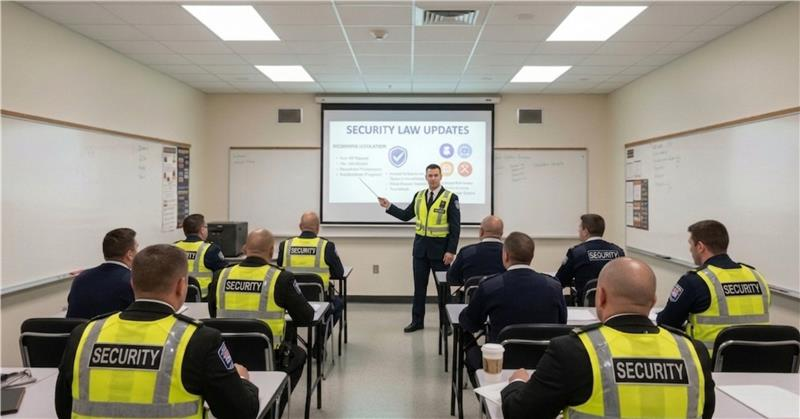
After the tragic events at Manchester Arena in 2017, the Home Office and the Security Industry Authority (SIA) have introduced stricter standards to keep people and assets safe.
Keeping up with these stringent updated or upcoming laws is essential for anyone working in security or currently in training, as they will soon become legal requirements.
It is vital to see how these changes impact your frontline career and help you handle responsibility better than ever when you are out on a shift.
For now, don’t worry about the extra details. This guide walks you through the new SIA rules for your Security Guard Refresher Training.
1. Martyn’s Law: The Terrorism (Protection of Premises) Act 2025
Related Resources:
Martyn’s Law stands as the most influential update to Security Industry Authority (SIA) training in recent years.
Following the inquiries into the Manchester Arena and London Bridge incidents, Parliament passed the Terrorism (Protection of Premises) Act 2025.
These events highlighted a persistent threat, leading to a shift in how the British public views safety at large gatherings.
In response, the government and the SIA introduced this legislation to protect people and reduce the risks associated with such threats.
Law moves away from reactive security, making proactive preparedness a legal requirement for those managing venues.
The Act introduces a level-based system based on the capacity of the premises, requiring you to adapt to your approach depending on the size of the crowd.
- Standard Duty: This level applies to smaller venues that hold 100 to 799 people. If you work in one of these locations, you must take specific, straightforward steps to prepare for a potential incident. Your duties involve training staff, creating an incident response plan and maintaining a high level of vigilance during your shift.
- Enhanced Duty: This level covers larger venues with a capacity of 800 or more, such as major arenas, stadiums and large nightclubs. These locations meet stricter requirements due to their size. You will need to conduct comprehensive risk assessments and follow detailed security plans. These venues also appoint dedicated compliance officers to oversee safety standards.
Implementation & Enforcement
While Parliament has passed the Terrorism (Protection of Premises) Act 2025, the legal requirements do not apply just yet. The law is currently in an implementation phase to give industry time to adapt.
- Current Status: The Act is now part of British law, but the government is not yet enforcing its requirements. You have time to learn new standards before they become mandatory.
- Timeline for Change: The government has set a minimum 24-month implementation period. Because of this schedule, you are likely to have until April 2027 before full compliance becomes a legal necessity.
- What Happens Next: During these next two years, the Home Office will release official guidance to help you understand your specific duties. At the same time, the Security Industry Authority (SIA) will set up its new regulatory systems to oversee the Act.
Even though you do not need to meet these standards immediately, starting your preparations now can help you avoid a last-minute rush. Many venue owners find that early planning makes the transition much smoother for their teams.
SIA Refresher Training: What the Changes Mean for You
Martyn’s Law places you at the heart of public safety across the UK. Because of these changes, your role now carries more weight in protecting the community from harm.
Your mandatory refresher training now includes advanced skills in counterterrorism, risk assessment and emergency response. This updated curriculum helps you meet new legal standards and manage potential threats with greater confidence.
2. Increased Standards for Close Protection Operatives
Related Resource: SIA Announces New Refresher Training for Close Protection
The SIA has introduced stricter rules for the close protection sector to improve safety standards. These updates mean you must complete specific training to renew your licence.
Since April 2022, new applicants have followed an updated course that includes first aid, terrorism awareness and physical intervention. If you held a licence before that date, you likely moved to a shorter “top-up” course from October 2022. This system helps everyone meet the same high standards without repeating the entire qualifications.
The Requirements at a Glance
- New Applicants: You need the full updated course plus a first aid certificate.
- Renewing Your Licence: You only need “top-up” training and first aid.
Important Dates for Your Schedule
The government recently updated its guidance to include mandatory refresher training for close protection, door supervision and security guard roles. Keeping these milestones in mind helps you plan your career:
- 27 August 2025: The SIA officially announced the new refresher requirements.
- 1 October 2025: Official training providers began offering these new courses.
- 1 April 2026: Refresher training becomes a mandatory requirement for all licence renewals.
The Mandatory EFAW Prerequisite
Related Resource: SIA Confirms Refresher Training Requirements
Emergency First Aid at Work (EFAW) by Training4Employment acts as a firm requirement for your training. Training providers check that your EFAW certificate has at least 12 months of validity remaining before you start a refresher course.
A Brief Timeline of Changes
The EFAW rules were introduced gradually over a few years so people could adjust:
- 1 April 2021: The EFAW rule began for new Door Supervisor and Security Guard applicants.
- 1 October 2021: The rule expanded to include all licence renewals and top-up training, not just for Door Supervisor and Security Guard applicants.
- 1 April 2022: Close Protection roles moved to a more demanding standard, requiring an advanced Level 3 First Aid at Work (FAW) certificate.
- 1 April 2025: You must hold a valid EFAW certificate to attend the latest refresher training for your licence renewal.
Licence Switching Rules
Related Resource: UK Security Industry Changes (SIA)
SIA believes in your freedom to change careers within the frontline security industry. Moving on from the security industry is perfectly fine and SIA supports you in doing so. Therefore, SIA introduced new flexibility for operatives with higher-tier licences who want to switch their role focus.
Under the SIA updated rules, if you hold a Door Supervisor licence, you can choose to take the SIA security guard’s refresher training instead of the Door Supervisor Refresher. This will allow you to switch to a Security Guard licence when you renew it.
However, keep in mind that Security Guard Training does not include the physical intervention module. If you still want to have the option of working as a Door Supervisor, you’ll need to take Door Supervisor Refresher Training.
3. The Home Office Consultation: Regulating Contractors and In-House Teams
Related Resources:
As discussed, the 2017 Manchester Arena attack led to an official inquiry that highlighted a need for stronger security rules. Following these findings, besides Martyn’s Law, the government is also considering stricter standards for the CCTV industry. The Home Office recently started public consultation on two specific areas.
In-House CCTV Operators
At present, if you work directly for a private shopping centre or a supermarket as a CCTV operator, you might not need an SIA licence. The government is reviewing it to make licencing mandatory for all in-house CCTV staff. This update would bring your requirements in line with those contractors.
Security Contractors
The consultation also explores licencing the businesses that provide security staff. Instead of only licencing you as an individual operative, the government might require the company that hires you to hold a specific business licence.
The Aim of These Changes
These proposals aim to create consistent vetting and training standards across the board. The government believes that licencing these CCTV roles can help identify unsuitable workers and improve public safety.
If the Home Office accepts these changes, in-house teams in Birmingham and across the UK will likely need to book formal SIA training.
Many in the industry believe that a unified approach provides a clearer path for professional development.
By keeping everyone to the same high standard, the sector can provide more robust protection to the public.
4. CPIW Qualification
Related Resources:
Launched in early 2026, the Ofqual-regulated Level 3 CPIW qualification under Martyn’s Law is aimed at security and venue managers. Whilst the law does not make this certificate mandatory, NaCTSO created it to help these professionals show that they understand the new rules and know how to apply them.
SIA Refresher Training: What the Changes Mean for You
While you may not need the CPIW Level 3 for your current role, it provides a clear path for your move into senior security or venue management. This training keeps you up to date with modern safety rules. If you want a promotion, this qualification is a vital step. Most top firms now treat this certificate as a standard requirement for those who want to lead a team.
Behind the Scenes Changes in UK Security
Martyn’s Law is not only changing the visible rules. It is also creating wider changes behind the scenes in the UK security sector, with stronger oversight, rising standards and greater focus on public safety. (GOV.UK)
- SIA leadership direction
In January 2026, Laura Gibb stepped in as the new director to lead this effort. To support this new role, the SIA is hiring over 100 new operational staff. These teams will move beyond just checking individual licences and will instead focus on venue compliance. Their work will involve:
- Field Inspections: Visiting venues to ensure they meet the legal requirements for their “Tier” (Standard or Enhanced).
- Compliance Audits: Reviewing counter-terrorism plans, risk assessments and staff training records.
- Guidance & Support: Acting as advisors to help businesses understand their new legal duties before enforcing penalties.
- Regional Delivery: Working locally across the UK to ensure consistent safety standards in every city.
Overall, this shows a clear shift in the SIA’s role, with a more structured regulatory model and a stronger focus on public protection. (GOV.UK)
- Industry tightening
The Home Office has also consulted on possible licencing changes for in-house CCTV operators and security contractors.
This signals a wider push towards more consistent vetting, training and accountability across the sector, especially where some roles have historically sat outside the main licencing framework. (GOV.UK)
- Enforcement mindset
The SIA has stated that its approach during the implementation period will be supportive and proportionate, helping organisations understand their future duties under Martyn’s Law. Because the law is not yet in force, the SIA does not yet have its new powers and official guidance is still being finalised.
However, the regulator is already preparing its Section 12 guidance, which will set out how it will investigate, inspect and use its powers once the regime begins. It has also made clear that its inspection model will be risk-based, fair and focused on public safety, showing that compliance will carry much greater weight in the years ahead. (GOV.UK)
Conclusion
The days of viewing security work as casual or unskilled labour are over.
With the introduction of Martyn’s Law, leadership roles like the CPIW and mandatory refresher training, the UK is building a stronger frontline against modern threats.
Meeting these strict standards is now a responsibility you share with your venue manager and the company that hires you. By working together, you help create a professional environment where everyone understands their duties.